Showing posts with label aggregation usc studio cluster. Show all posts
0 com

schematic design review


review

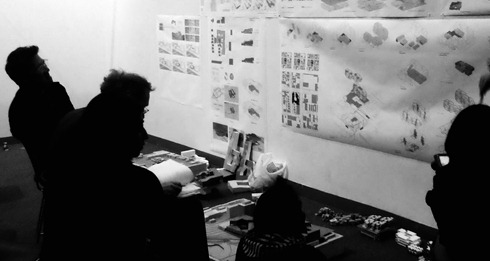
Yesterday was our first schematic design review within the studios. Each of us stayed up for countless hours to produce work that was intended to thrill our critics. Overall yesterday was quite a success, I received good feedback from our professors and I’m excited for the work being produced this semester by myself as well as the other students in my studio. The next few weeks till midterms will be rough but I think that they will be a lot of fun and we all have a lot of possibility within our work.


Print
site organization diagram


The intent of the project is to use the aggregation studies that we used earlier to create mixed use housing on the site of Santa Monica and Vermont in LA. The goal of the project is to create a development that integrates with the different user groups of the site and engenders interaction between the housing development and the larger urban fabric.
 
See More Pictures…


0 com

aggregating…

Aggregations 02
student work
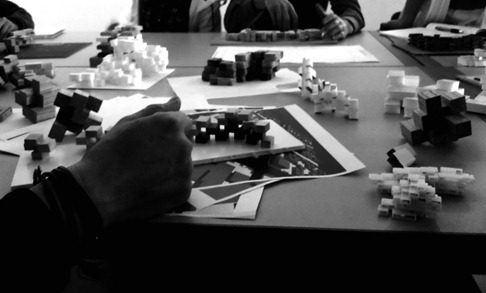
It has been an exciting and busy week in studio. We have been creating models like crazy that look at the emergence of pattern and spatial complexity by utilizing aggregation. For these exercises we have been asked to create a cluster that propagates itself by attaching and connecting to one another in several different ways. As you can see from the image above the studio is becoming full of models that offer exciting potential. We are investigating these issues to engender ideas for our studio project which is to design multiuse housing. These clusters are being looked at as ideas of creating something that is spatially more complex than the typical single loaded and double loaded corridors associated within most housing projects. So far the investigation has opened up a lot of opportunity for further investigation and has been a new way for me to think about design. It is interesting to see what these bottoms up approaches will yield.